
The circular economy is a model of production and consumption that keeps materials, products and resources in use for as long as possible. Instead of the traditional linear “take-make-waste” approach.
A circular economy is designed to minimise waste, extend the life of products through reuse and repair, and regenerate materials at the end of a service life.
Moving to a circular economy is not only a waste management issue: almost half of total greenhouse gas emissions and more than 90% of biodiversity loss and water stress come from resource extraction and the processing of materials, fuels and food; and a circular economy has potential to create new business opportunities and more competitive ways of producing and consuming.
Reuse, repair and recycling sit at the heart of this transition. Each practice keeps materials and products circulating in the economy for longer, but they do so in different ways and at different stages of a product’s life.
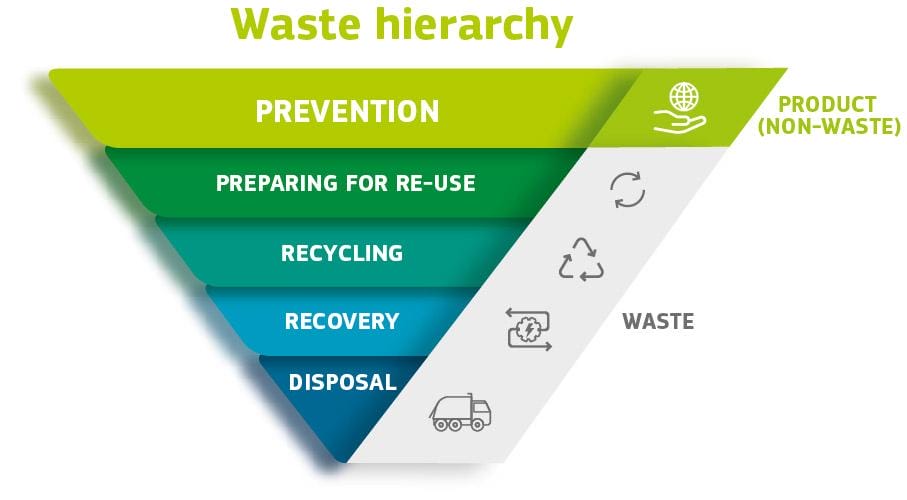
The waste hierarchy is a framework at the basis of circular economy initiatives and legislation in the EU. It ranks waste management options from most to least environmentally preferable, starting with prevention.
Reuse is the preferred option for managing resources because it prevents an item from becoming waste in the first place and reduces demand for new production.
It includes trading and swapping (through charity shops, second-hand stores or online platforms), repairing, borrowing, leasing and upcycling.
Repair is a key activity extending the working life of the things we own. Community repair prevents waste, saves carbon emissions, and supports local skills and social connection – from repair cafés to specialist furniture, electronics and textile repair services.
You can find local repair options through the CRNI members directory, RepairMyStuff, and repair cafés around the country, or learn to repair items yourself through resources such as iFixit.
Recycling keeps the materials in products, such as paper, plastic, glass, textiles or metals, circulating in the economy, so that new materials do not need to be extracted from natural resources to replace them. It sits below reuse in the waste hierarchy because it requires the item to be broken down through sometimes more energy-intensive processes, but it remains a vital way of recovering value from goods that cannot be reused.
CRNI engages directly in policy development in Ireland and at EU level, responding to consultations on issues from the Waste Framework Directive to national food waste and textiles policy. Among its key recommendations for a fairer, more circular economy:
Under EU law, environmental policy is a shared competence between the European Union and its member states, meaning both can legislate and adopt legally binding acts. Because of this, a big part of the recent advancements in Irish circular economy policies come straight from EU legislation.
The Circular Economy Action Plan, adopted by the European Commission in March 2020, is one of the main building blocks of the European Green Deal. It sets out 35 actions covering the whole product lifecycle, from design and production through to consumption, repair and recycling, with the aim of doubling the EU’s circular material use rate and helping the EU reach climate neutrality by 2050.
Key actions from the plan that are being rolled out now include:
The European Commission is due to adopt a Circular Economy Act in 2026. This aims to build on the work carried out under the implementation of the 2020 Circular Economy Action Plan.
The Act’s objective is to establish a Single Market for secondary raw materials, increase the supply of high-quality recycled materials and stimulate demand for these materials within the EU. It will contribute to the ambition laid out in the Competitiveness Compass to make the EU the world leader in the circular economy by 2030.
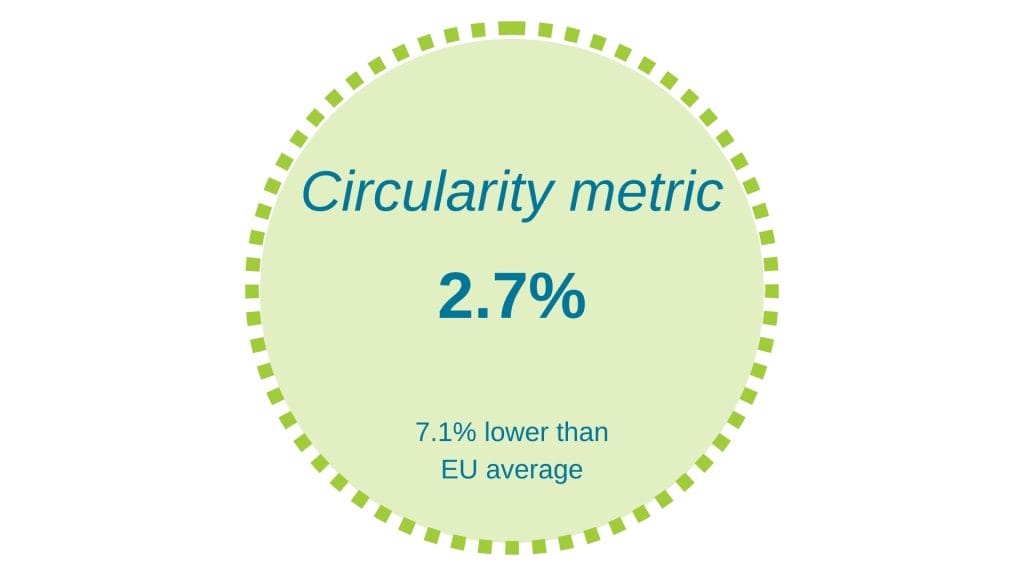
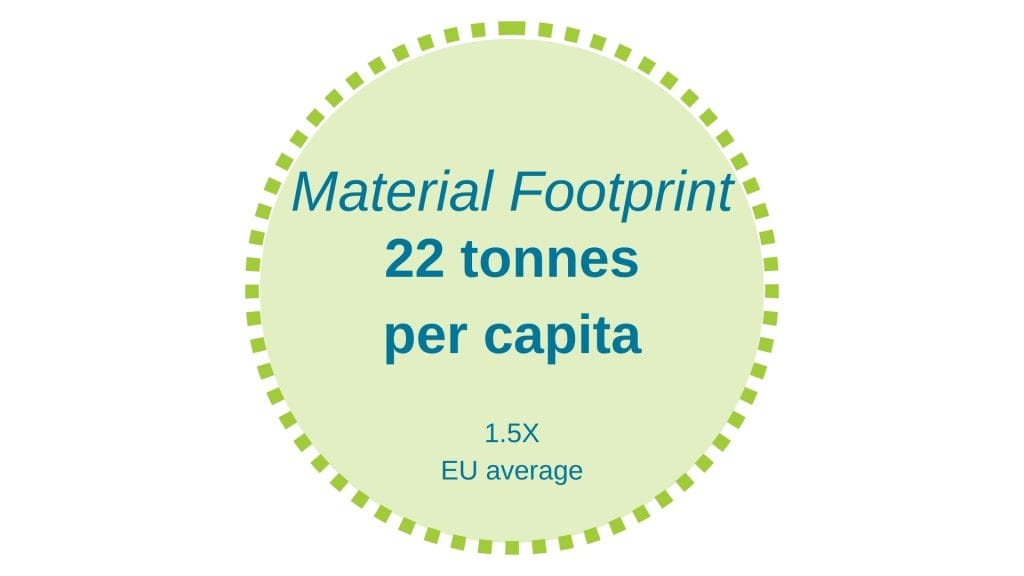
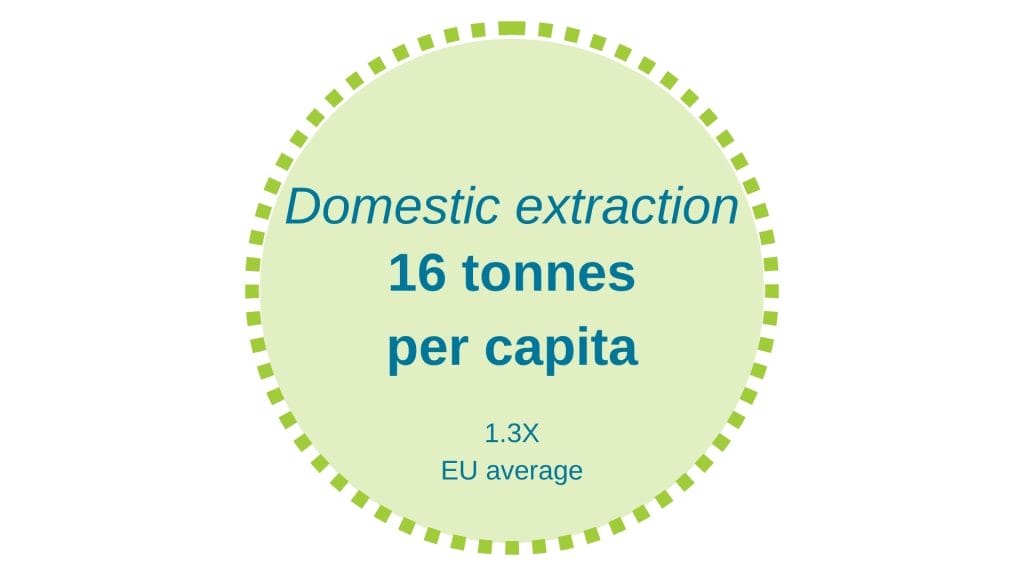
Find out more about Ireland’s transition to a circular economy by consulting Ireland’s Circularity Gap Report here.
Ireland’s transition to a circular economy is underpinned by the Circular Economy and Miscellaneous Provisions Act 2022, the Waste Action Plan for a Circular Economy (2020-2025), and the Whole of Government Circular Economy Strategy, most recently updated as the Circular Economy Strategy 2026-2028.
The strategy sets a national target to more than double Ireland’s circular material use rate by 2030, and identifies community-level circular initiatives, social equity and public sector leadership, including green and social procurement, as central to reaching it.
Sector-specific legislation includes the recent National Policy Statement and Roadmap on Circular Textiles, published in April 2026, for which CRNI sits on the Textiles Advisory Group, and the upcoming Bioeconomy Strategy.
Consultations are now open for the Textiles Extended Producer Responsibility (EPR) Delivery Plan and the draft Bioeconomy Strategy 2026-2030.
Ireland already has a set of Extended Producer Responsibility Schemes in place, for packaging, batteries, Waste Electrical and Electronic Equipment, Tyres, End of Life Vehicles (ELVs), Farm Plastics and Single Use Plastics. These schemes vary in scope and functioning, but they are a practical implementation of the ‘Polluter pays’ principle, as it puts financial responsibility on producers for the collection and management of their products at the end of their life.
Find out more here.
CRNI has published policy submissions in the last years. See them here.
Public bodies in Ireland and across the EU spend billions of euro every year on goods, services and works. In Ireland, public purchasing accounts for around 10-12% of GDP. Green Public Procurement (GPP) means using this purchasing power to buy products and services with a lower environmental impact, including reused, refurbished, repaired or recycled goods, instead of defaulting to new.
Social procurement goes a step further, taking into account the economic, environmental and social impact of a public body’s buying choices, including support for social enterprises and community organisations.
GPP is a key lever in the Circular Economy Action Plan and features prominently in Ireland’s 2025 Climate Action Plan and Circular Economy Strategy, because public buyers can create stable, predictable demand for circular products and services, helping reuse, repair and recycling social enterprises to grow. In practice, this can mean specifying refurbished IT equipment or furniture in a tender, requiring minimum recycled content, using life-cycle costing rather than lowest up-front price, or structuring tenders in smaller lots so social enterprises can compete.
The EPA has published GPP guidance in 2024 and supplier training resources to help public bodies and suppliers put this into practice, and CRNI’s member directory and Green + Social Virtual Trade Fair project aimed to connect public and private buyers with members offering reuse, repair and recycling goods and services.
Reuse, repair and recycling are not only environmental activities, they are also, in Ireland and across Europe, delivered to a large extent by the social economy: community-based organisations, social enterprises and charities that put people and community first while operating in a commercially sustainable way, contributing to what’s often called the “triple bottom line” of people, planet and profit. The majority of CRNI’s members are entities of this kind.
This matters for a number of reasons. First, these activities are genuinely labour-intensive: sorting, cleaning, testing and repairing goods requires people, not just machinery, which is why reuse and repair create significantly more jobs per tonne of material handled than recycling or disposal.
Second, this employment is often specifically designed to be inclusive. Many CRNI members provide training and employment routes for people who are long-term unemployed, living with disabilities, or otherwise facing barriers to the labour market, through schemes such as Community Services Programme, Tús, the Rural Social Scheme and Community Employment. This work supports people out of poverty and into skills and career progression, while volunteering opportunities with reuse and recycling organisations also tackle social exclusion and loneliness.
Third, community-based reuse and repair make circular practices affordable and accessible through low-cost second-hand goods, free or low-cost repair, and local skills-sharing, bringing the benefits of the circular transition to people and places that might otherwise be left behind by it. This is why EU circular economy legislation, including the Waste Framework Directive, explicitly encourages support for reuse and repair networks run by social economy enterprises, and why Ireland’s Circular Economy Strategy identifies social equity and community-level action as core objectives, not add-ons.
Policy and knowledge:
Further resources:
Circular economy
Textiles
Sign up to our bi-weekly newsletter to keep up to date on CRNI, its members and the circular social enterprise space in Ireland. For information about our privacy practices, see here.
CRNI receives core and operational funding through the Department of Climate, Energy and the Environment.
For more information, check out their website.
CRNI receives operational funding through Community Foundation Ireland.
For more information, check out their website.
CRNI’s Green + Social Virtual Trade Fair is funded by Ireland’s Regional Waste Management Plan Offices. This innovative virtual platform is open 24/7 and gives visitors the opportunity to explore green and social procurement opportunities provided by reuse, repair and recycling social enterprises and community-based organisations across Ireland.
CRNI is the all island representative body for community based reuse, recycling and waste prevention organisations. We are funded by the Department of Climate, Energy and the Environment, project funding and through membership. CRNI is a proud member of the European RREUSE network.
Company Limited by Guarantee. Registered in Ireland No. 493039
Registered Charity No. 20077259
CHY No.19637
Community Resources Network CLG
Registered office:
The Tara BuildingPhone: +353 87 173 5184
Email: [email protected]
© Community Resources Network Ireland. All Rights Reserved.